Disease
Symptoms of Biofilm Infections (2006 - 2019)
This
page is currently being updated and will be asap completed!
Most symptoms of the
disease do not only affect the skin, but are multisystemic. Individuals
(animals, humans) who have been under long-term stress or trauma and
are likely to have metabolic disorders or long-term illnesses and thus
have an insufficient HPA stress axis in the long run, rather than
simply having a weakened immune system, are affected.
It is also possible that part of the immune system has been
weakened by
previous infections, such as Lyme disease, chlamydiosis, etc., or
by cancer, diabetes, etc. Most of the symptoms of the disease
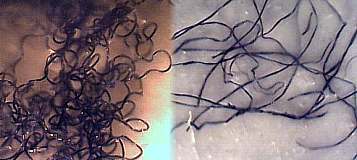
(cutaneous, subcutaneous, systemic) are caused by biofilm blebs or
hyaline, black or colorful polysaccharid filaments (filamentous
biofilm).
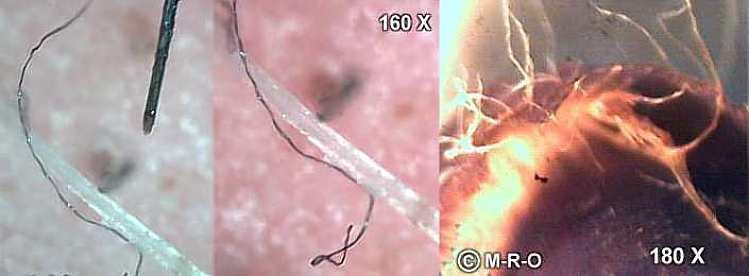
The filaments
manifest
themselves especially under stress periods,
sweating or pressure on the
lymphatic system, increasingly on the skin.
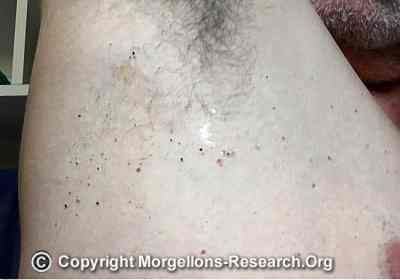
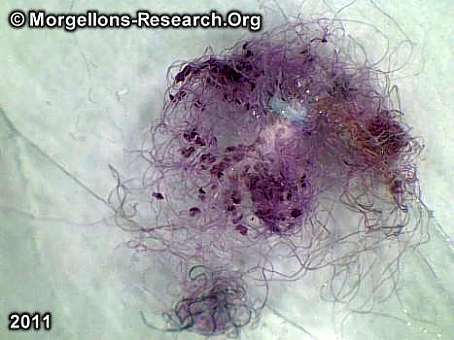
Sweated
black specks (filament balls) under the armpit
Often
these filaments occur in advance only in the corners of the eyes,
eyelids, sinuses and ears. A skin disease can only develop later or not
at all, depending on the immune response of the affected person, which
is primarily a histamine-related, non-IgE-induced, allergic reaction to
the bacterial enzymes of the biofilm bacteria.
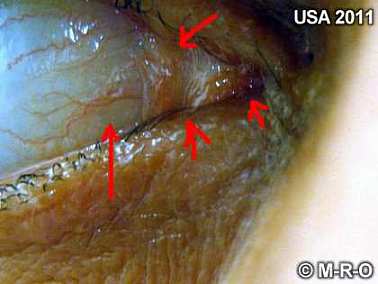
Chronic
conjunctivitis or inflammation of the tear sac (dacryozystitis) may
develop later or a later blindness may develop. The lower link also
describes an eye cornea-perforation
Source: Universität
of Alberta/Canada - Morgellons disease leading to corneal perforation
and enucleation

Main symptoms
Skin
pustules, blisters, nodules, swellings, crawling sensations, mild to
severe
itching, vibrate under the skin, red spots or dots, eczema-like
areas and depigmentation patterns, dermatitis, punctual
bleeding/hematomas, lupus, cellulitis and thinner skin, hyperhydrosis
Graying
of the hair, hair
loss, bursted blood vessels, partial tissue athropy, ear
pain/inflammation, tooth root inflammation, tooth loss,
loss of teeth, lack of blood circulation, nose, fingers, ears, toes,
genitals
D
eep
furrows
and often swollen tongue, blisters at the tip of the tongue or
edges,
dry mouth and throat, redness of the eyes, eye infections, grey star,
sensitivity to light, 3-D vision, blurred and poorer visibility,
brunning, tearing eyes with granulate feeling in the eyes
Swollen
and hanging
eyelids and tear sac, swollen feet, legs and face (edema), small
bruises (hematomas) or almost black and swollen ankles, fatigue
syndrome, shortness of breath, fingers or wrist inflammation, stiff
neck, reduced performance
Muscle
reduction, twitching/cramps,
balance disorders, chronic tough, asthmatic cough, frequent pneumonia,
joint, back, and limb pain, gastrointestinal problems, asthma, COPD,
emphysema, hypertension, heart stinging, cardiac rhythm disorders,
circulatory weakness, frequent headaches
Nerve
and muscle
inflammation, hormonal and vegetative dysfunction, porous veins,
nerves, forgetfulness, depression, anxiety, panic attacks, poor
short-term memory, over-irritability, mood swings, poor concentration,
brain
fog, aggressiveness,
general indifference
Anemia
- lack of red blood cells - iron, vitamin D, B1, B6,
B12, serotonin, folic acid. swollen lymph nodes, mammary gland
swelling, Interstitial cystitis, kidney inflammation, prostata
inflammation, tinnitus, sinusitis, upper abdominal pain, bloating,
fibromyalgia, MS and Alzheimer's symptoms
Heart
attack and stroke, thrombosis at
any time possible, numbness in the fingertips or
hands, carpal tunnel syndrome, face, legs, arms, hot
flashes or cold sensitivity, drastic weight gain, diabetes II,
cancer such pancreatic or cervical cancer possible in later stage
Biofilm
Symptoms:
In
the first stage of infestation (1st - 2nd month) after the onset of the
disease, one initially feels only a few stings, pustules, blisters or
itching. However, tiny, black dots (thread balls) are visible, which
emerge from the skin pores at typical sweating areas.
Pustules
or small blisters are more likely to occur when the skin is penetrated
again and an allergic reaction of the skin to the bacterial enzymes
occurs, similar to insect bites. Later, these symptoms may increase due
to stress, sweating or moisturizing the skin.
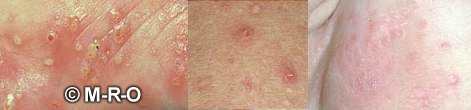
Affected
people also report that they subjectively feel the feeling of glass
wool on the body, which is also known to pick and sting unbearably.
There is also often a tingling or itching in the nose and mouth area,
or partly also in the eyes and spread over the whole face and skalp
area. Presumably they are produced by wandering/growing biofilms, which
can cause not only nerve irritation and tingling, but also eczema and
wandering red spots (erythema migrans) etc.
But
even single, microscopic threads can cause fine tickling (neuropathy)
when they grow out of the lymphatic and blood system and then out of
the skin pores/hair shafts. One could also compare these fine
sensations having contact with spider webs, which can cause
similarly fine
tingling sensations and nerve irritations on the head and face.
However, the nerve stimulus arises mostly internally, directly on the
nerves.
In
addition to the first skin symptoms, swelling and congestion of the
lymphatic system usually occur, whereby the feet can swell in such a
way that one no longer fits in the shoes.
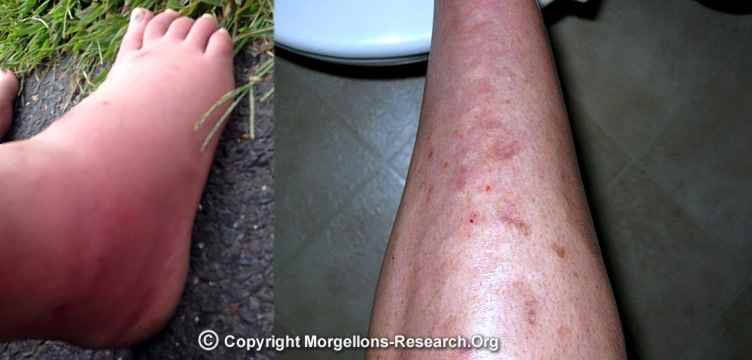
Frequently
also hematomas with dark or black feet. Furthermore, at the same time,
an increase in the HPA stress axis may be present to relieve the stress
situation.
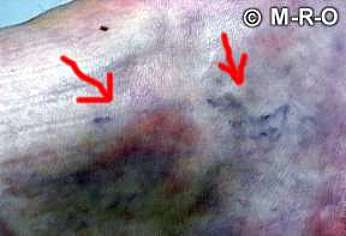
The pituitary gland is driven to peak performance then,
including higher adrenal triggering to produce more cortisol. Also
visible on a bull's-neck, bronze-colored skin (higher melanocyte
expression) and rapid weight gain (30-40 pounds) due to eating attacks.
But also the beard and hair growth is accelerated.
Only much later, when the stress becomes permanent stress,
the HPA
stress axis collapses and/or due to swelling in the brain area and
pressure on the pituitary gland, pituitary insufficiency occurs,
whereby the adrenal gland also suffers and produces less cortisol.
Between these processes is then also the chronic fatigue syndrome. You
sleep, but wake up dog-tired, as if you hadn't slept for days.
Very often, an electrostatic charge by surrounding magnetic
fields can
be another reason (phone, screen, etc.) that the bacteria become more
active in the biofilm, and often also at full moon a different picture
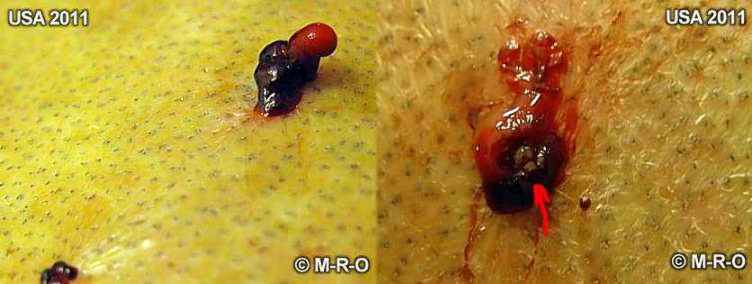
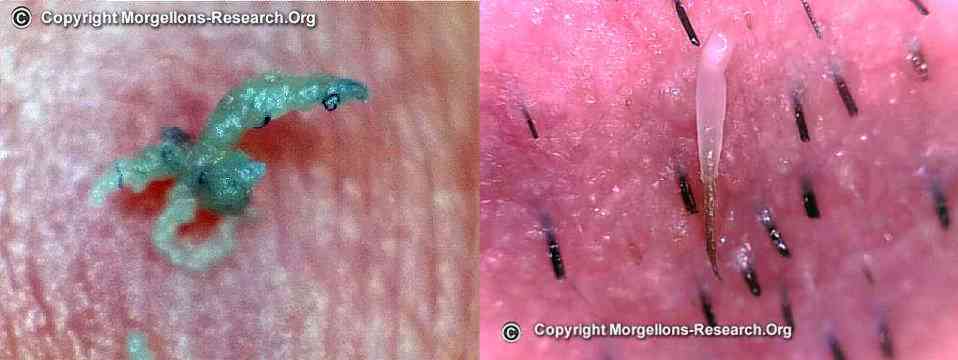
results. Since these bacteria only multiply at lower temperatures,
filamentous growth takes place from the pores, towards the skin, with
the development of fruiting bodies and later capsification, or the
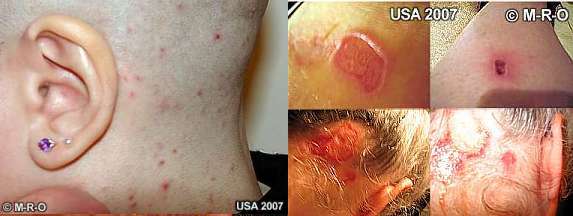
biofilm grows out with the hair root. See the pictures below:
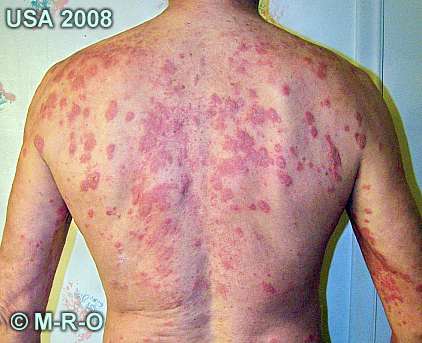
In the further
infestation stage (3rd - 4th month) more and more skin areas are
affected (see below pictures), which are increasingly littered with
pustules and blisters and there is also an increased emigration of
these black dots (filament bundles) from the skin pores.
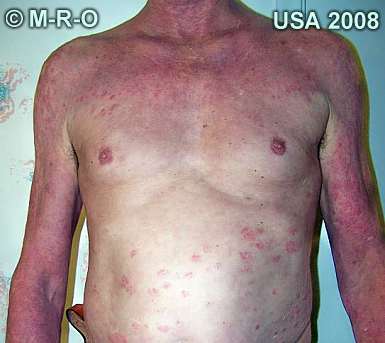
In any case, most skin symptoms are usually located near
typical sweat
zones, although this can affect different areas of each host body. Some
sweat more hormonally in the chin area, others first on the nose,
forehead, cheeks, belt line or on the hands and feet. Daily stress
hormone release of the host body with increased sweating seems to be
associated with stronger topical infestation symptoms. In the later
stage of the disease, the clinical picture can generally deteriorate,
also due to alopecia of the infested terminal hairs (leg and head hair,
eyelashes, eyebrows, etc.), which can, however, regrow later.
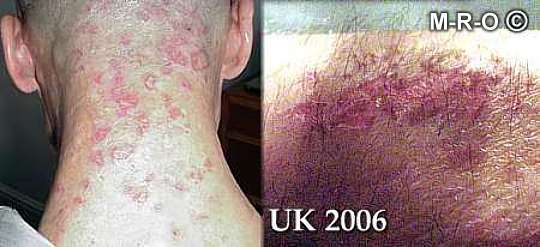
In
most cases, premature graying of the hair is also noticeable. In the
later course of the disease, formation of crusts can also occur,
erythema, eczema,
papules and nodules, as well as depigmentation patterns (white spots),
which are caused by melanin absorption. Often the melanocytes in the
human skin are destroyed and the white spots remain. In addition, the
clinical picture can be significantly enhanced by severe anti-immunity
influences, malnutrition and also skin scratching effects
(super-infection).
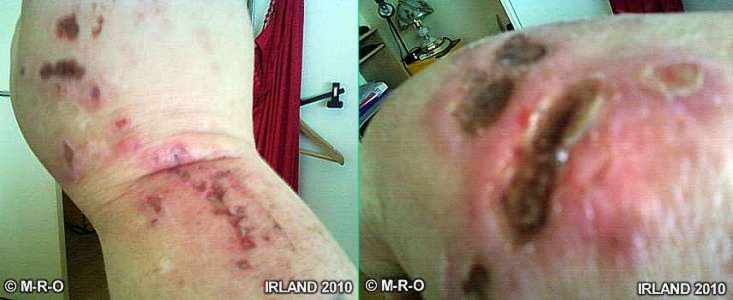
Furthermore,
continuous damage to the skin due to various fungal and bacterial
co-infections (skin and hair fracture) in open wounds can be added,
such as by fungal infection or by bacteria Staphilococcus
aureus
and B. luteus. The general image of the skin is characterized by crusty
excesses and a dermatous skin surface, which often resembles a doughy
and unshaped mass, which are littered with pustules and open spots, as
well as dandruff-wicking areas and wrinkle formation on hands and neck
in the late stadium.
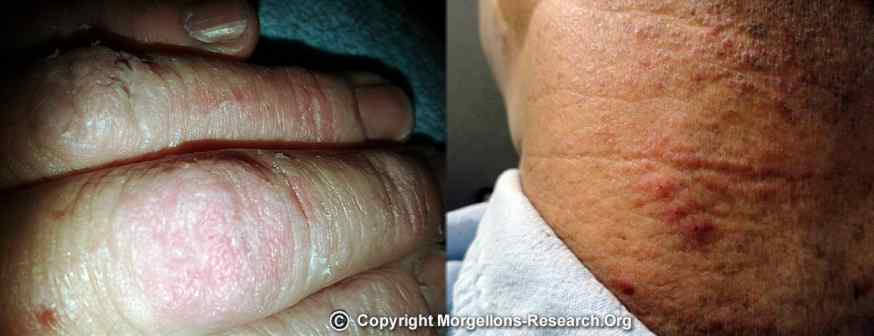
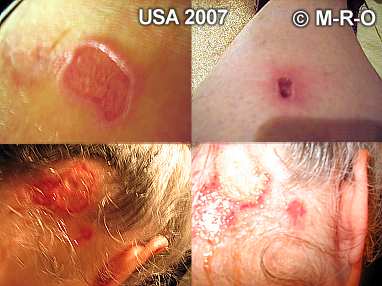
In
particular, anthrax-like, crater-like wounds such as from B. megaterium are
produced.
The
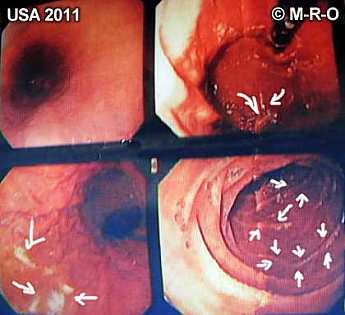
biofilm and bacteria are found alternately in the large and small
intestine, the lymphatic system, subcutaneously and in the skin pores.
Topical phenomena sometimes occur more or less and are therefore not a
criterion for definitive disease detection. Because we are not dealing
with a skin disease. Depending on the coincidence, threads can only
settle in the area of the eyes, mouth, nose, or throat in the initial
phase of an infection, and only later can they migrate through
ingestion into the intestine and bloodstream and then through the whole
body. In the intestine, mucosal inflammation and an ulcer can develop.
In sensitive people, an increased release of histamine and
subsequent stress reaction of the body can occur, whereby the organisms
are increasingly driven out of the skin in advance. People with
autoimmune diseases are predestined for a disease! In this stress
phase, more and more skin sensations are noticeable due
to filaments on the skin, which later try to return into the
skin
(enzyme
release) in order to settle there again. The host body constantly tries
to excrete these foreign bodies via the large intestine, small
intestine, lymphatic system and skin.
Therefore, increased kidney and bladder pain and an increased
urge to
urinate may occur. Sometimes without signs of bacterial infection, but
due to mechanical irritation in the tissue (interstitial). Moist areas
of the skin as well as the entire mouth area (throat, tongue, lips),
nose and sinuses and eyes are generally preferred and are usually
always affected in a later phase. So wherever there is more nitrogen in
the body, there is a stronger colonization of the bacteria.
But also areas such as skin and hair, when the threads or
biofilm bulk
grow out of the pores/hair shafts. In the further course,
microfilaments may also occur within a pre-sponsor period of a few
weeks. With connective tissue nodes and granulomas. Often also in the
oral mucosa. In other areas of the skin, chronic dermatitis may also
develop and increased pigmentation (dark melanin spots) or
depigmentation (bright spots) of the skin, lichenification (lichen) and
tissue atrophy or sarcoidosis, blistering, itching, papuous
exanthemandism and lymphadenitis.
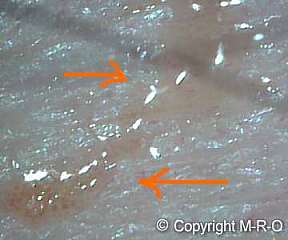
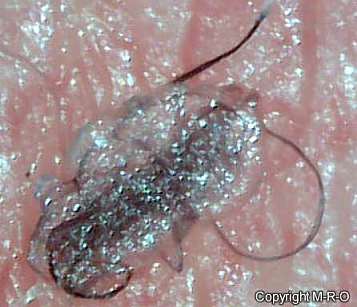 Biofilm
on the skin
Biofilm
on the skin
It's really hard to believe that bacterial
colonies can also make rapid
movements. In this and other known cases, one simply has to accept it,
when it comes to such unusual phenomens in nature. See this video clip
about filaments/threads moved by Bacillus
subtilis.
Motions
caused by Bacillus subtilis macrofibres result in new forms of
movement of the multicellular structures (Mendelson et al.,
Microbiology)
As primary, immunosuppressive diseases, other
bacterial infections, as
well as viral diseases, mycoses, cancer and chemotherapy,
corticosteroid therapy, endocrine diseases, long-term stress,
autoimmune diseases, metabolic diseases, diabetes mellitus, Hashimoto
and Cushing syndrome, etc., could also play a role.
Very often, despite skin infestation, no redness or other
typical skin
symptoms are visible, which could indicate a typical infestation area.
But you can also use a black light lamp to make the filaments partially
invisible to the eye visible on the skin.
Infestations in the forehead area can initially only be
recognized by a
slight lift or quad or elongated stripes, which can sometimes extend
over the entire forehead. This represents, in the proper sense, the
beginning of a gradual undercavity of the skin in this area, followed
by a later tissue reduction.
In the genital area, for example, men only find a pustule
from time to
time and is also rather the exception, but mostly around the genital
area, especially at the scrotum. Sometimes redness and pimples also
occur on the glans.
The bacteria are rather subcutaneous and feed on remaining
urine
(nitrogen source) on the glans. Unfortunately, this also results in a
slight loss of tissue on the glans. In women, these threads are also
detectable in the vagina, uterus, labia (pustules, black dots, white
threads) and on the cervix.
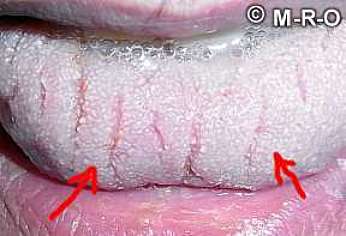
Very
often, a swelling of the tongue occurs, or with deep furrows
Furthermore,
the immune system in patients can be greatly weakened by additional
viral, bacterial, and mycotic co-infections. In addition, autoimmune
diseases such as Lupus SLE, Hashimoto, Renaud Syndrome and SJOGRENS
Syndrome, as well as cancer can develop in parallel, if not already
present. In general, these bacteria can be spread throughout the body
through the bloodstream and lymphatic system.
In particular, sooner or later they enter the peripheral
extremities of the body (eyes, nose, ears, skin, hair/hair roots,
fingers, feet, toes, tongue, gums. Tooth root, nipples, genitals,
scrotum, cervical mouth, etc.), where, depending on the higher blood
circulation, they are also increasingly washed up there and enter the
surrounding tissue via the capillary vessels.
One could almost compare it to the distribution of river gold
that is
deposited in the curves and shallow waters. If bacteria filaments then
drill themselves out of the fine capillary vessels and thus damage
them, then this can be recognized on the skin as a hematoma (blood
pouring into the tissue) and also in the capillary vessels of
the
eyes, which then appear reddened or blood-drained. In the case of an
external re-infection, these organisms and their threads drill into the
host skin quite quickly (approx. 6-10 sec.).
The penetration into the skin is very painfully noticeable as
a stitch
or bite and becomes visible in the form of a larger skin swelling. What
is associated with an allergic reaction of the skin, due to proteolitic
enzymes of organisms with skin-etching/dissolving properties
(keratinase, protease and liptase), but without being typical
keratinophilic pathogens like some fungi. In the late stages of this
disease, expanding biofilm filaments can spread like a spider web under
the skin and possibly connect. Pustules and pimples can now occur
anywhere due to external pressure on the skin.
It is generally promoted the formation of wrinkles and the
graying of
the hair faster and it can be said that this disease makes a person age
faster and make him look older. The ever-increasing stress with this
disease does the rest. Animals cannot cope with this stress for long
and die for example from circulatory or heart failure. Daily but
incorrect hygiene can also play a major role, which can sometimes even
encourage spread.
Therefore, further measures should be taken to avoid the
spread of
pathogens. According to the manufacturer's description, Agrobacteria
should be rinsed with water for at least 15 minutes after contact with
the skin and eyes. Clothes should not be brought home under any
circumstances. Thanks for the info dear distributor!
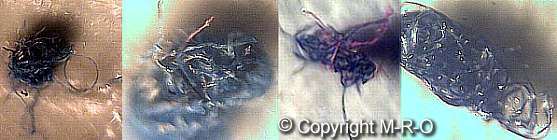
A transfer of filaments can
also be via bodily fluids (mother's
milk, spit, urine, blood, semen, vaginal fluid, placenta). Bacteria
increasingly colonize the already weakened areas that have been caused
by previous injuries or are currently developing (scars, liver spots,
vaccinations, broken bones, herniated discs, skin wrinkles, appendix,
tooth root inflammation, cancer, etc.). Since there are more protein
degradation products (nitrogen).
In a later phase of infection, general physical weakness,
shortness of
breath and reduced performance occur, followed by chronic fatigue
syndrome accompanied by concentration problems, irritability and
forgetfulness. Swelling of the lymph nodes, hair loss and wrinkle
formation of the skin, pigment disorders as well as visual disturbances
and corneal opacity of the eyes also occur. Paired with tingling or
numbness of extremities (carpal tunnel syndrome) and later
hardening/tension of the nerve strands and muscle fibers.
Irregular skin thickness, cellulitis, collapsed, red and
diluted skin
areas (Acrodermatitis chronica atrophicans) can also occur, and
premature aging of the skin is also generally forced (paper skin,
collagen loss, tissue loss).
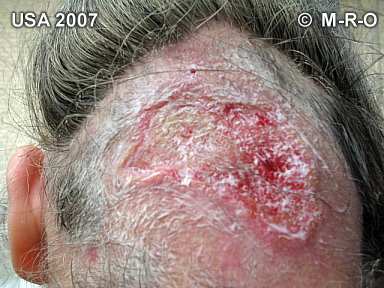
Mercury fillings,
plastic fillings and crowns can also fail out in case of
infestation, as these biofilms can also eat through tooth channels.
Because teeth as well as bones and the cornea (cornea) contain collagen
(collagen fibrils). In addition, due to the bacterial biofilm on the
cornea (cornea) and the conjunctiva, there is inflammation (keratitis)
with a generally poorer vision, an increased sensitivity to light and
other inflammatory symptoms or typical symptoms of the eye disease,
which usually occur only in old age such as catishance (hangover act).
Through the lymphatic system and the subsequent eye
discharge, an
infestation or irritation of the anterior and posterior occular
segments (nerve endings, trigeminal nerve), the eye muscle (symptom
blur) and the retina can take place. Also a foreign body feeling and a
one-sided redness (mostly right) of a pair of eyes is sometimes
present, as well as inflammation conjunctiva and a blurred view, 3-D
view paired with small flashes of light in the eyes, as well as gray
and black shadows.
Many eye diseases such as keratitis or a clouding of the
cornea or
temporary irritation is probably caused by chemical (biofilm+enzymes),
or mechanical stimuli (biofilm granules). If one looks at white
backgrounds, then often also on the Cornea thread-shaped inclusions can
be seen. With diagnostic eye drops such as the contrast agent Minims
made of fluorescein sodium (fluorescent dye) you can make these
elongated inclusions or scratches visible.
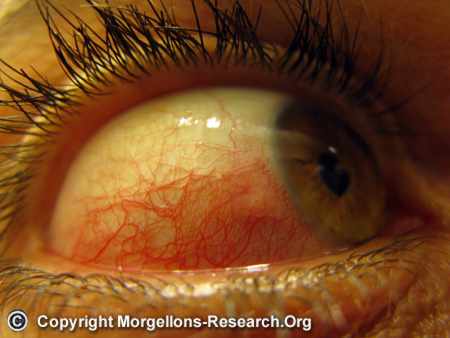

Reddened
eyes and elongated inclusions/perforations of the cornea
Numerous neurological disorders are also present, as well as arthritis,
Alzheimer's and fibromyalgia. or muscle wasting, signs of auto-immune
disease, as well as head and limb pain, tinnitus, general irritability,
depression, wineiness, mood swings, anger and resignation, agony,
apathy, schizophrenia and even suicidal thoughts can occur more often.
Furthermore, gastrointestinal disorders (diarrhea, bloating, reflux),
unexplained back pain, edema of the legs (lymph), stiff neck and limbs,
thrombosis, shortness of breath, heart failure and liver failure are
added.
In case of infestation of the throat or lungs, the
disease can be
worsened by a chronic cough and tough mucous ejection. After a
prolonged infestation of the lungs, chronic bronchitis or pneumonia can
develop, which can worsen additionally due to co-infections from the
bacteria Chlamydia pneumoniae or/and
enterobacteria such as E.
coli and Klebsiella strains. Asthma, COPD, pulmonary
emphysema and fever-like and chill-like conditions can also occur more
often.
Many sufferers also generally have worse teeth with gum loss
(periodontosis) and also tooth loss. As well as urological problems
(bladder, kidney, prostate), scaly, dry skin, circulatory disorders
(cold nose, ears, hands probably due to cortisol deficiency) and also a
tissue reduction on the sexual organs (penis, labia) are recognizable
in the final stage.
If it spreads to internal organs or in the abdominal cavity
and chest
cavity, then it can also lead to an inflammation of the appendix even
in the age of 50 or 60 years. Meningitis, epilepsy, encephalitis,
stroke and schizophrenia may occur when the meningitis or brain is
infested. Blindness and paralysis and numbness can also occur,
constantly or sporadically, possibly cancer or a heart attack and
stroke may occur later. Among the many consequences of this spread
process of the bacteria are also cellulitis, burst veins, edema,
thrombosis, arteriussclerosis-like symptoms.
Many symptoms can also flatten or disappear completely, or
break out
again after years due to an increased stress condition (trauma) and
reduced immune defense of the
body. Due to the manifold disease symptoms, many other opportunistic
pathogens may also be involved in the entire clinical picture, such as
viruses (herpes), or bacteria and fungi, such as Staphylococcus aureus,
Streptococcus pneumoniae,
Enterobacteria, Aspergillus
spp. and Candida.
Similar symptoms such as CFS, meninigitis, encephalitis can
also be
caused by viruses such as varicella, coxsackie, enterovirus, EBV
(Ebstein-Barr virus), herpes simplex type 2, LCM virus and HIV, and
also by enterobacteria (E.coli)
Streptococcus group B, and Listeria
monocytogenes.
More often, it can affect older people, children and babies
or
immunosuppressed individuals, but also healthy individuals if they have
a temporarily stress-related
weakened
immune system, etc. Final comment: Due to a biofilm infection, one is
in a constant state of shock and is severely traumatized. You also have
enormous difficulties in maintaining your usual social life.
PATIENT'S PATH OF SUFFERING:
Morgellons disease is the grim reality in
the US and many other countries around the world. The suffering of
these people is more than unimaginable, and this cannot be compared to
AIDS, cancer or other known diseases.
You literally find yourself restless, lonely and alone
without
getting effective medical help. Many of those affected have already
committed suicide, the path of suffering is similar to that of syphilis
a hundred years ago, which is still raging and has never been
completely eradicated!
Even the enormous logistics with clothes and laundry are
almost
impossible to cope with on their own and are becoming more and more
debilitating every day, especially since even higher-degree washing
operations cannot kill these Morgellons biofilms. Overwhelmed by the
enormous stress, one decays from a certain point in time into lethargy,
isolation and increased inability to live.
A visit to the doctor seems
useless at some point and is only a time waste and expense. These
emotional
strains often turn into anger and aggression, which are
sometimes left out at their own doctor.
Understandably, if the doctor does not want to or can not
grasp the
drama of the situation properly, since he is very attentive to his
budget, has no time anyway and does not want to deal with the fate of
these sick people mentally, and then deliberately sible them as
simulants or mentally ill people. In this way, he also promotes
on top psychosis in the patient, which can often lead to a
misinterpretation
of the doctor.
He then (if not before) probably classifies the patient
as mentally ill and sends him home with the diagnosis "DOP" and with
psychopharmaceuticals like "Haldol", that has extremely bad side
effects and is even absolutely despised by heroin addicts.
The only party that benefits from this is the pharmaceutical
industry!
Antidepressants such as Zoloft can even lead to suicide. All
this
happens more often than thought, without that a doctor would
have
performed a proper examination at all, and this is interpreted by the
patient as a deliberate appeasement and ignorance and meets a total
incomprehension.
Incomprehensibly, however, these very signs are
misinterpreted by most
doctors as drug or alcohol addiction. In principle, it is even
fashionable to take natural remedies (Valerian, St. John's wort, etc.)
or even certain psychopharmaceuticals to calm the patient and also the
microorganisms, as more stress worsens the symptoms!
However, in such
difficult cases, a good doctor should refer patients to infection
specialists in order to initiate examinations for further
clarification. In any case, different cultures should be made of the
filaments, rather than just antibody tests.
Treatments should be carried out especially after clinical
symptoms,
even if a test was negative. In the interests of the patient, the
humanistic intention applies here too, in case of doubt help the
patient, and not the other way round, in case of doubt help the health
insurance company!
 Site
Site